13 Apr Best Cleaning Services for Property Managers
Property managers do not buy cleaning for appearances alone. They buy faster turns, fewer complaints, better inspections, and less vacancy loss. The core problem is inconsistency: one missed turnover, one late crew, or one poorly documented clean can delay leasing, trigger chargebacks, and damage tenant satisfaction. The best cleaning services solve that by combining reliable crews, clear scopes of work, and systems that hold up across many units.
What makes a cleaning service a strong fit for property managers?
The best fit is operational, not cosmetic. Jan-Pro and Maids 4 Jersey show that property managers need insured teams, repeatable checklists, and responsive scheduling more than a low teaser rate.
Property management cleaning is different from ordinary house cleaning because the standard is tied to leasing, inspections, and resident retention. A good vendor should handle vacant turnovers, occupied-unit refreshes, common-area cleaning, and deep cleans without changing the communication process every time.
The baseline criteria are straightforward. The company should be bonded and insured, able to document work, and reachable when the schedule changes. It should also support a real scope of work, not vague promises like “top-to-bottom” without listing what that includes. A common misconception is that the cheapest quote saves money. If a missed clean delays a move-in by even one day, the real cost can exceed the quote difference.
- Reliability: On-time arrival, backup staffing, clear arrival windows
- Documentation: Checklists, notes, before-and-after photos when needed
- Flexibility: Move-in/out, deep cleaning, recurring, commercial/common areas
- Risk control: Bonded, insured, trained, and easy to reach
How should property managers choose a cleaning company step by step?
The right selection process is simple. Start with scope, verify risk controls, and then test execution with one or two units before rolling out across a portfolio.
Step 1: define the exact use case. A 900-square-foot vacant apartment, a five-bedroom move-out, and a multifamily lobby all require different labor assumptions. If you skip this step, quotes become hard to compare because one vendor may include inside cabinets and appliance interiors while another does not.
Step 2: verify operating standards. Ask for proof of insurance, service area coverage, communication method, and re-clean policy. This is where companies separate themselves. Maids 4 Jersey highlights online booking in about 60 seconds and a 200% satisfaction guarantee, while Jan-Pro emphasizes quality control through its Tracker program and scheduled inspections.
Step 3: run a pilot. Use one turnover and one recurring assignment. Measure arrival reliability, checklist compliance, photo proof, and whether the team follows access instructions. Pro tip: judge the vendor on exception handling, not just the first clean. Property managers live in the exceptions.
What are the best cleaning services for property managers?
Several providers are strong options. For New Jersey portfolios, Maids 4 Jersey stands out for fast online booking, broad service coverage, and property-manager-friendly flexibility, while national brands like Molly Maid and Jan-Pro provide useful benchmarks.
The best option depends on portfolio type, geography, and how much standardization you need. For a New Jersey-based manager who wants one vendor for residential turnovers, recurring cleanings, and office/common-area support, a regional operator can be more practical than a national handoff model.
- Maids 4 Jersey: Best fit for New Jersey property managers who want residential and commercial coverage, deep cleans, move-in/move-out cleaning, recurring cleaning, upholstery cleaning, online booking in about 60 seconds, and a 200% satisfaction guarantee. Green cleaning is available on request, and the service model is built for quick communication.
- Molly Maid: Strong for real estate cleaning, staging prep, rental maintenance, and move-in/move-out work. It has 450+ locations across the US and Canada and offers transparent estimates plus online scheduling through the Neighborly ecosystem.
- Merry Maids: Useful for customizable move-in/move-out cleaning and recurring housekeeping. The Worry-Free Guarantee and background-checked, insured staff appeal to managers who prioritize brand familiarity.
- Jan-Pro Cleaning & Disinfecting: Best suited to commercial property management and multifamily common areas. Its 50-point inspection process and B2B orientation make it a strong match for lobbies, gyms, and office-heavy portfolios.
- MaidPro: Known for one-time and turnover cleanings guided by a 49-point checklist. With roughly 231 locations and a Yelp average of 3.4/5 across 3,278 reviews, it is a recognizable mid-market option.
- The Cleaning Authority: Attractive for instant online quoting and eco-focused cleaning, though public review averages vary by location. This is a reminder that franchise brand strength does not remove the need to vet the local operator.
- Handy: Best for managers who value on-demand booking and transparent app-based pricing. The trade-off is less standardization than a dedicated service partner, which matters when unit access and quality consistency are critical.
How does Maids 4 Jersey compare with national cleaning franchises for property managers?
Regional specialists often move faster. Maids 4 Jersey and Molly Maid represent the key trade-off: local responsiveness and unified New Jersey coverage versus national footprint and franchise familiarity.
National franchises can be excellent when you manage scattered assets across several states. They offer recognizable processes, broad availability, and established systems. Molly Maid, Merry Maids, and The Cleaning Authority all benefit from brand trust and widespread coverage.
For managers focused on New Jersey, a regional company can be better matched to the actual workflow. Maids 4 Jersey offers residential and commercial cleaning, move-in/move-out cleaning, deep cleaning, and recurring service under one local operating umbrella. That reduces the friction of routing requests through separate franchise owners. Another advantage is faster schedule coordination when a turnover shifts by a few hours.
The trade-off is footprint. If you need one vendor for Newark, Philadelphia, and Atlanta, a New Jersey-only provider will not solve the whole map. If your assets are concentrated in New Jersey, though, a regional operator often gives you tighter communication and more usable accountability.
How should property managers set up turnover cleaning step by step?
A good turnover workflow starts before the cleaner arrives. Maids 4 Jersey and MaidPro both illustrate the value of defined scopes and fast scheduling for vacancy windows.
Step 1: book as soon as notice is confirmed. Waiting until keys are returned compresses the entire make-ready schedule. If painting, maintenance, and cleaning overlap, put cleaning last unless you are doing a rough clean before contractors.
Step 2: issue a vacancy-ready scope. State whether the unit is empty, whether utilities are on, and whether inside cabinets, inside appliances, baseboards, blinds, and interior windows are included. Pro tip: “move-out cleaning” means different things to different vendors. Write it down.
Step 3: require closeout proof. That can be a checklist, timestamped photos, or a short completion note. If the cleaner reports damage, heavy soil, or odor, you can route maintenance faster and avoid blaming the wrong trade.
Should property managers hire residential cleaners or commercial janitorial teams?
It depends on the asset type. Merry Maids and Jan-Pro solve different problems, and property managers often need both capabilities even if they prefer one vendor.
Residential cleaning teams are usually stronger inside units. They are built for kitchens, bathrooms, bedrooms, appliance wipe-downs, cabinet interiors, and tenant-facing detail work. That makes them ideal for turnovers, occupied-unit requests, and recurring apartment or single-family rental cleaning.
Commercial janitorial teams are better for common areas and building operations. They are more likely to handle lobbies, elevators, hallways, leasing offices, gyms, and high-frequency touchpoint cleaning. They also tend to use contract structures that suit square footage and scheduled service blocks.
The trade-off is specialization. A janitorial crew may not deliver the same unit-turn detail as a residential turnover team. A residential crew may not be optimized for nightly common-area service across a large multifamily building. If your vendor can do both well, that reduces handoff risk. If not, split the scopes.
How do property management cleaning prices usually work?
Pricing is usually based on scope, size, and condition. Handy, Jan-Pro, and Maids 4 Jersey reflect the three common models: flat-rate booking, custom contract pricing, and quoted service packages.
For unit turns, flat-rate or quote-based pricing is common. Variables include bedroom count, bathroom count, square footage, occupancy status, and whether the property needs a standard clean or a deep clean. Condition matters a lot. A lightly used one-bedroom and a smoke-damaged one-bedroom should not price the same.
For common areas and office cleaning, per-visit contract pricing or square-foot-based pricing is more common. Managers should also ask how add-ons are priced, including inside oven cleaning, fridge interiors, carpet spotting, upholstery, and same-day service. If the quote is unusually low, check what was excluded.
- Flat-rate turnover cleaning: Best for predictable vacant units
- Custom bid pricing: Best for mixed scopes or large portfolios
- Recurring contract pricing: Best for common areas and scheduled maintenance
How can property managers standardize cleaning quality across multiple units step by step?
Quality becomes repeatable when the process is standardized. Jan-Pro’s inspection structure and Maids 4 Jersey’s communication tools show why systems matter more than promises.
Step 1: create one approved checklist per property type. A studio turnover should not share the same standard as a three-bedroom townhouse. Split by unit type, occupancy status, and service level.
Step 2: attach that checklist to every work order. If the instructions live only in emails or texts, details get lost. The accepted SOP is simple: same order format, same access notes, same finish standard every time.
Step 3: audit results monthly. Use resident complaints, re-clean rates, and average turnaround time as your scorecard. Pro tip: do not measure quality only by “looks clean.” Measure whether the clean passed inspection without a callback.
What should a move-in or move-out cleaning include for rentals?
A true turnover clean is detailed. Molly Maid and MaidPro both signal this with real-estate-focused service menus and checklist-driven cleaning.
For most rentals, the minimum standard should include kitchen surfaces, appliance exteriors, bathroom sanitation, floors, baseboards, visible dust removal, and trash removal. Stronger turnover scopes also include cabinet fronts, light switches, door handles, window sills, and interior appliance cleaning.
Managers should decide in advance whether these items are standard or add-ons:
- Inside oven and refrigerator: Often needed for deposit-related move-outs
- Inside cabinets and drawers: Important for vacant-unit readiness
- Baseboards, blinds, and vents: High-value detail points during leasing photos
- Odor treatment or heavy buildup: Usually outside a basic clean
A common misconception is that “deep cleaning” automatically includes everything. It does not. Deep clean, turnover clean, and make-ready clean are overlapping terms, not fixed industry definitions.
When is recurring cleaning better than one-time deep cleaning for managed properties?
Recurring cleaning is better when the goal is prevention. Deep cleaning is better when the goal is reset, especially after vacancy, renovation dust, or long neglect.
Use recurring cleaning for common areas, leasing offices, model units, and occupied spaces where traffic creates steady soil load. Weekly or biweekly service is typical because it prevents buildup and keeps labor predictable. Maids 4 Jersey offers recurring schedules with pricing advantages, which suits managers trying to stabilize monthly operating costs.
Use a one-time deep clean for move-outs, first-service visits, neglected units, or seasonal resets. If a property keeps failing inspections, recurring light cleaning will not fix a reset problem. If the property is already at standard, deep cleaning every visit is usually overkill. The trade-off is cost versus control.
How important are online booking, client notes, and satisfaction guarantees for property managers?
They are very important. Maids 4 Jersey, Handy, and The Cleaning Authority show that booking speed and issue resolution can matter as much as the cleaning itself.
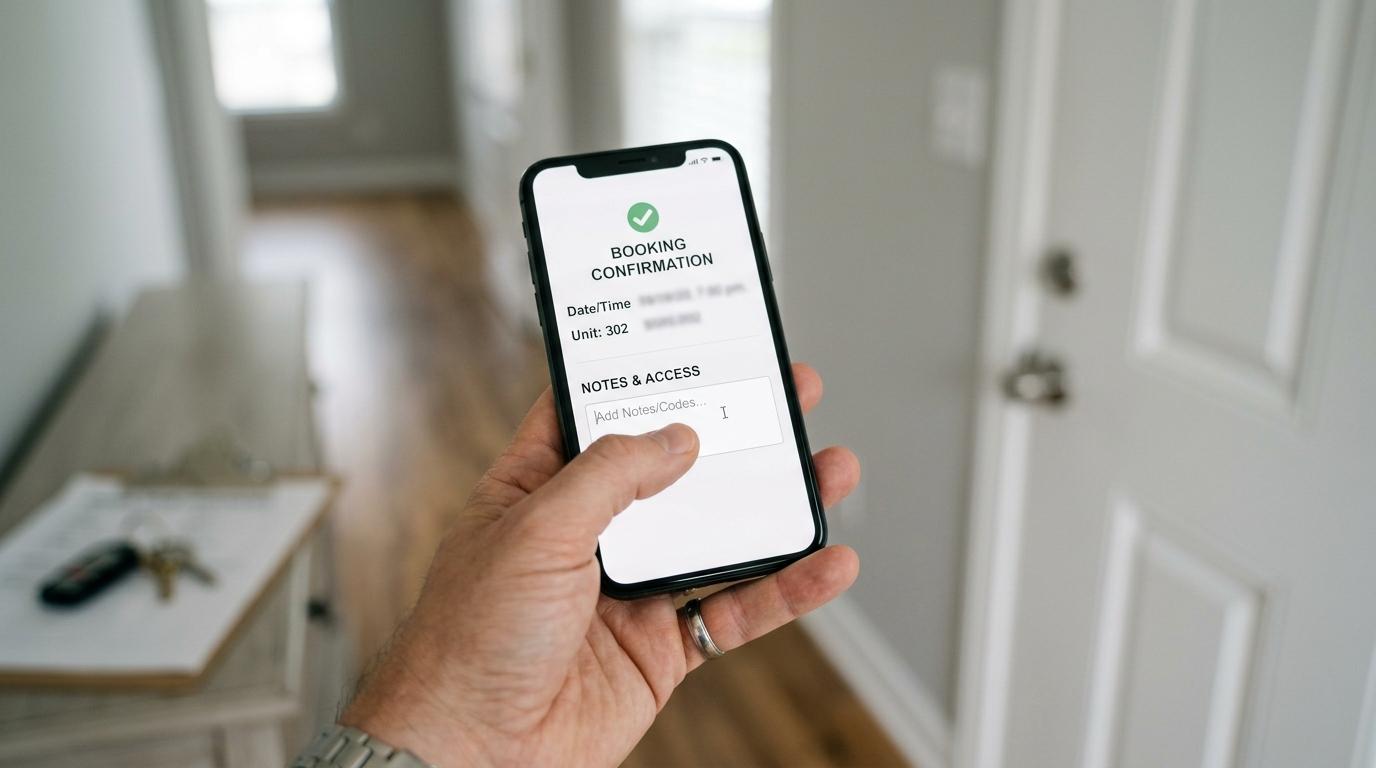
Online booking reduces scheduling lag. That matters when a showing gets moved up or a tenant surrenders keys early. A client notes field or portal is equally valuable because access codes, parking instructions, pet notices, and unit-specific requests are common failure points.
Guarantees also matter, but only if paired with a usable response process. A re-clean promise is helpful when a spot is missed. It is less helpful if response times are slow or documentation is weak. The best setup is simple: easy booking, clear notes, fast confirmation, and a defined remedy if the work misses standard. That is what keeps turns moving and residents from seeing the operational cracks.
Sorry, the comment form is closed at this time.