
06 May Best Move-Out Cleaning Tips for Renters
Move-out cleaning has a direct effect on security deposits, landlord references, and how smoothly a lease ends. The main problem it solves is simple: most renters clean the visible mess but miss the high-scrutiny details that trigger deductions, like oven interiors, cabinet shelves, soap scum, and baseboards. A strong plan turns a rushed last day into a controlled process. If you clean in the right order, you save time, avoid rework, and leave better proof of the unit’s condition.
Why does move-out cleaning matter for renters?
Move-out cleaning directly affects deposit outcomes. New Jersey landlords and property managers often judge condition first by the kitchen and bathroom, and residue in an oven or tub is easy to document as a chargeable issue.
Most lease disputes about cleaning are not about whether a renter tried. They are about whether the unit was returned in clearly rentable condition. That usually means no food residue, no visible soap film, no trash, no dust lines on baseboards, and no odor from appliances or drains.
A common mistake is assuming “broom clean” means move-out ready. In practice, broom clean is often only the floor baseline. If your lease mentions appliances, cabinets, or sanitizing, then the inspection standard is higher than a quick sweep and wipe.
When should renters start a move-out cleaning plan?
Start 7 to 10 days before move-out. End-of-month bookings fill first, and appliance buildup in a refrigerator or oven usually needs more than one pass if it has been ignored for months.
A good timeline is simple. One week out, sort what is leaving, trash what is not, and read the lease cleaning language. Two to three days out, empty cabinets, shelves, and the fridge. On the last day, clean after the truck is gone, not before.
Pro tip: if you need a professional cleaner, book early even if your packing is not finished. Date availability matters more than perfect readiness, and you can usually add notes later about access, extras, and problem spots.
What are the smartest move-out cleaning options for renters in New Jersey?
The best option depends on condition, time, and risk tolerance. Maids 4 Jersey, a DIY checklist, and hybrid plans all work, but they solve different problems.
If the unit is already in strong shape, a DIY clean may be enough. If the oven, fridge, bathrooms, and baseboards need detail work, the faster choice is often a professional move-out clean. If your lease names specific items, match your method to that checklist, not to guesswork.
- Maids 4 Jersey move-in/out cleaning: Best for renters who need a full top-to-bottom reset in one visit. The company publicly states that its move-in/out cleaning combines deep cleaning with inside cabinets, inside fridge, and inside oven, with supplies included, online booking, and optional extras like interior windows and wall cleaning. See the move-in/out cleaning page and services checklist.
- DIY top-to-bottom cleaning: Best when the home has been maintained weekly and the biggest task is final polishing, not grease or buildup removal.
- Hybrid cleaning plan: Best when renters can handle light prep, patching, and photos but want pros for bathrooms, appliances, and floors.
- Lease-required vendor or landlord-approved cleaner: Best when the lease names a process or when a building has strict turnover rules.
How should renters prepare the unit before any move-out cleaning?
Preparation should happen before scrubbing starts. Boxes, food, and leftover toiletries block access, and cleaners cannot fully clean cabinet interiors or appliance shelves that are still full.
Step 1 is clearing the space. Remove furniture, wall decor, food, shower items, and shelf liners. A move-out clean works best in an empty unit because every corner, vent edge, and baseboard is reachable.
Step 2 is emptying the detailed areas people forget. That includes cabinets, drawers, the refrigerator, and the oven storage drawer. Maids 4 Jersey specifically notes that cabinets should be emptied before arrival if interior cabinet cleaning is needed.
Step 3 is access and instructions. If you will not be present, leave a key, lockbox code, or garage code, and note problem areas in advance. Their FAQ page allows for this kind of coordination. Pro tip: do not leave trash bags in a cleaned room “for later.” They leak, smell, and force you to re-clean the floor.
Which rooms and surfaces cause the most deposit deductions?
Kitchens, bathrooms, and appliance interiors create the most cleaning deductions. Ovens, tubs, and cabinet interiors hold visible residue longer than bedrooms, so inspectors notice them first.
Landlords usually look for the same signs: grease, soap scum, odor, hair, crumbs, sticky shelves, dust buildup, and dirty corners. Floors matter, but the real red flags are the places that suggest neglect rather than ordinary use.
The highest-risk spots are usually these:
- Oven and hood: baked-on grease, splatter, filter residue
- Refrigerator and freezer: spills, crumbs, odor, sticky bins
- Tub, tile, and grout: soap scum, mildew staining, hair
- Cabinets and drawers: crumbs, liners, ring marks, adhesive residue
- Baseboards and doors: dust lines, fingerprints, scuffs
A common misconception is that bedrooms cause the biggest problems because they are larger. In most move-outs, the opposite is true. Small wet areas and food-prep areas take more labor per square foot.
How do you clean kitchen appliances for move-out step by step?
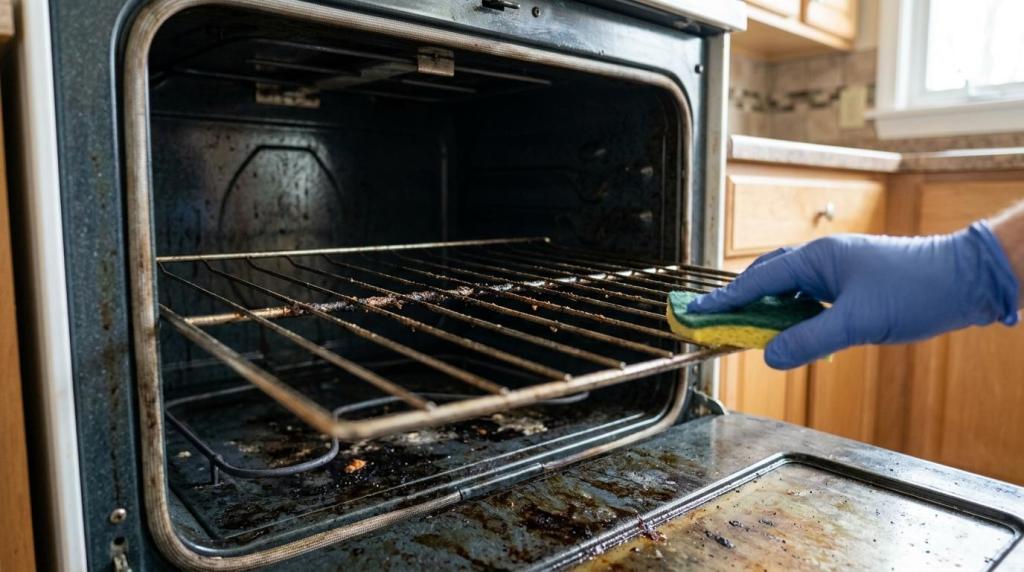
Appliance interiors need a real reset, not a quick wipe. A refrigerator and oven are inspection magnets because residue there signals poor turnover hygiene.
Step 1 is emptying and loosening debris. Remove shelves, bins, racks, and crumbs first. For the fridge, a mild cleaner and sponge are usually enough for shelves and walls. For the oven, scrape loose carbon before applying any solution.
Step 2 is matching the method to the soil level. A vinegar-and-water solution can help with light oven residue. Heavy buildup may need a stronger oven cleaner or the self-clean cycle if the manufacturer allows it. The trade-off is time and odor. Self-cleaning can take hours, create heat, and leave ash you still need to wipe away.
Step 3 is drying and rechecking the edges. Wipe gaskets, handles, control knobs, and the floor under the fridge if accessible. Common misconception: a shiny appliance exterior means the appliance is clean. Inspectors open doors.
Is DIY move-out cleaning or professional move-out cleaning the better choice?
DIY is cheaper in cash, while professional cleaning is cheaper in time and risk. The better choice depends on unit size, buildup, and how much your final day is already carrying.
If your rental is a studio or a well-kept one-bedroom and you have a full day, DIY can work. If the unit has grease in the oven, soap scale in the tub, interior cabinet residue, and heavy dust around trims, a professional crew often saves more than it costs because it cuts redo work and missed details.
Professional service also changes the logistics. Maids 4 Jersey states that supplies are included, booking takes about 60 seconds, and the move-in/out package already covers the deep-clean items renters most often forget. The trade-off is scheduling and price. DIY gives control, but only if you have time, energy, and the right products on hand.
What should renters clean first, second, and last on move-out day?
Clean high to low, wet to dry, and floors last. Ceiling fans, bathrooms, and final vacuuming should happen in that order after the moving truck is done.
Step 1 is dusting the top surfaces. Hit vents, fan blades, closet shelves, door frames, and window sills first. Dust falls, so anything you clean underneath too early will have to be redone.
Step 2 is the detail work in wet and greasy zones. Scrub bathrooms, then finish the kitchen, then wipe switches, handles, and mirrors. If you are using a pro cleaner, this is where to flag trouble spots like hard-water rings, grease at the range hood, or sticky cabinet doors.
Step 3 is floors and trash removal. Vacuum, then mop, then take every bag out. Pro tip: do not vacuum before movers finish. Rolling bins and shoe traffic will undo it in minutes.
How is move-out deep cleaning different from standard cleaning?
Move-out deep cleaning goes beyond maintenance cleaning. Standard cleaning covers accessible surfaces and floors, while deep cleaning reaches buildup, appliance interiors, cabinet insides, and detailed grime lines.
That difference matters because a lived-in home can look neat but still fail a move-out inspection. Standard cleaning usually means dusting, wiping mirrors, cleaning visible counters, vacuuming, and mopping. A move-out deep clean targets the hidden labor: inside fridge, inside oven, inside cabinets, baseboards, and grime around fixtures.
Maids 4 Jersey publicly frames move-in/out cleaning as deep cleaning plus inside cabinets, inside fridge, and inside oven. That is a good benchmark for renters comparing quotes. If a company says “move-out cleaning” but those interiors are extra, the lower price may not reflect the real scope.
How should renters handle walls, baseboards, and scuff marks?
Walls and baseboards need caution, not force. Flat paint and melamine sponges can remove marks, but over-scrubbing can burnish paint and make the wall look worse than the scuff did.
Start with dry dusting, then use a damp microfiber cloth on baseboards and doors. For scuffs, test a small hidden spot first. If the mark lightens quickly, continue gently. If paint transfers to the cloth, stop. Cleaning should not turn into surface damage.
This is also where renters should separate cleaning from repair. Scuffs, fingerprints, and dust are cleaning. Nail holes, peeling tape damage, and chipped paint are repairs. Maids 4 Jersey lists interior wall cleaning as an hourly add-on, which helps with marks, but cleaning is not the same as patching drywall.
How can renters document the apartment after cleaning for deposit protection?
Documentation should happen immediately after cleaning. An iPhone or Android camera, plus a same-day email, gives you a simple timestamped record if questions come up later.
Step 1 is taking wide photos of each room from the doorway and from one opposite corner. Then take close-ups of the kitchen sink, stove interior, fridge shelves, toilet, tub, vanity, and the inside of empty cabinets.
Step 2 is filming one slow walkthrough with lights on. Open the oven, fridge, closets, and cabinets while recording. If the unit is empty, show the floors and baseboards too.
Step 3 is sending the files to yourself and, if appropriate, the landlord or property manager. Common mistake: people take photos before the final trash run, then forget to update them after the last bag leaves.
What should renters ask before booking a move-out cleaning service?
Ask about scope before price. A quote means little if the oven, fridge, cabinets, windows, or walls are counted as extras you assumed were included.
The fastest way to compare services is to ask for the checklist, then match it to your lease and the unit’s condition. If you are leaving an apartment in Essex County or Bergen County, this matters even more at month-end when schedules tighten and you may not be present for the service.
Ask these questions before you book:
- What is included: inside oven, inside fridge, inside cabinets, baseboards, and bathrooms
- What costs extra: interior windows, wall washing, heavy buildup, or same-day changes
- What I must do first: empty cabinets, defrost freezer, remove trash, provide access
- What happens if I am not home: lockbox, key drop, arrival window, communication method
- What protection exists: bonded and insured status, satisfaction policy, cancellation terms
For renters who are staying local after the move, it also helps to know whether the company can handle the next phase, not just the move-out. That may mean recurring house cleaning in Nutley, NJ, ongoing cleaning services in Bloomfield, NJ, or a one-time deep cleaning in Verona, NJ, West Orange, Belleville, Livingston, Cedar Grove, or Glen Ridge once you are settled. If you want a full reset with clear scheduling and a checklist-driven scope, request a quote or schedule your move-out cleaning today.
Sorry, the comment form is closed at this time.