18 Apr Best Upholstery Cleaning for Pet Owners
Pet owners put more stress on upholstery than almost any other household habit. Fur, dander, body oils, muddy paws, and the occasional accident can turn a clean sofa into a source of odors, allergens, and repeat staining. Good upholstery cleaning solves two linked problems at once: it improves appearance and removes the organic residue that keeps smells coming back. The challenge is choosing a method that is strong enough for pet messes without harming fabric, padding, or the animals in the home.
What makes upholstery cleaning different for pet owners?
Pet upholstery needs a different cleaning plan because dog dander and cat oils cling to fabric faster than normal dust. On a microfiber sofa or sectional, hair, urine salts, and odor compounds settle into seams and cushion cores, not just the surface.
That changes the goal. With ordinary upholstery cleaning, you may only need soil removal and light deodorizing. In pet homes, you often need three things at once: physical hair removal, protein and oil breakdown, and odor neutralization that reaches the padding.
A common mistake is assuming that if the fabric looks clean, the problem is gone. It is not. If urine reached the insert or deck under the cushion, a surface spray may leave the sofa looking fine while odor returns a day later. Pet dander is also small enough to stay airborne and settle back into upholstery, which is why HEPA filtration matters. Standard HEPA filters are designed to capture particles down to 0.3 microns.
How do you remove pet hair and dander from upholstery effectively?
The best hair-removal method starts with a HEPA vacuum and ends with a rubber glove or lint roller. Dyson and Shark pet tools work because they pull loose fur first, then grab the hair that static keeps stuck to woven fabric.
Start dry, not wet. Water can make fur clump and push dander deeper into textured upholstery. Pro tip: slow vacuum passes in two directions remove far more hair than one fast pass.
- Vacuum cushions, arms, and backs slowly
- Use the crevice tool on seams and under cushions
- Finish with a slightly damp rubber glove or lint roller
- Wash throws, covers, and pet blankets separately
If someone in the home has allergies, do this at least weekly. If you wait until you can see a layer of fur, dander has already built up below it.
What upholstery cleaning services are best for pet owners?
The best service depends on how much odor, staining, and fabric risk you have. Maids 4 Jersey and upholstery specialists usually outperform carpet-only providers when the issue involves pet urine, dander, and delicate furniture fabrics.
The right pick depends on the furniture, the mess, and how often the problem repeats. Busy households often need more than one kind of cleaning support, especially when pet hair moves from floors to sofas and back again.
- Maids 4 Jersey: A strong fit for NJ homeowners who want upholstery cleaning plus recurring home cleaning from a reliable team. It works well for busy families, working professionals, and multi-pet homes that need scheduled upkeep, deeper resets, and pet-safe solutions without turning cleaning into a weekend project.
- Independent upholstery specialist: Best for older furniture, natural fibers, or stubborn odor in cushions. Ask whether they do fabric testing, enzyme dwell time, and extraction instead of deodorizer-only treatment.
- IICRC-style carpet and upholstery firm: Useful when rugs, stairs, and upholstered seating all need service in one visit. The trade-off is that upholstery may be a secondary service, so ask how often the technician cleans furniture specifically.
- National franchise provider: Helpful when you want standardized booking and broad service coverage. The trade-off is that technician experience can vary by location.
- Rental machine and spot-treatment approach: Best for one fresh stain when you can act immediately. The trade-off is weaker suction, slower drying, and a higher chance of overwetting foam.
How should you treat a fresh pet urine or vomit stain on upholstery?
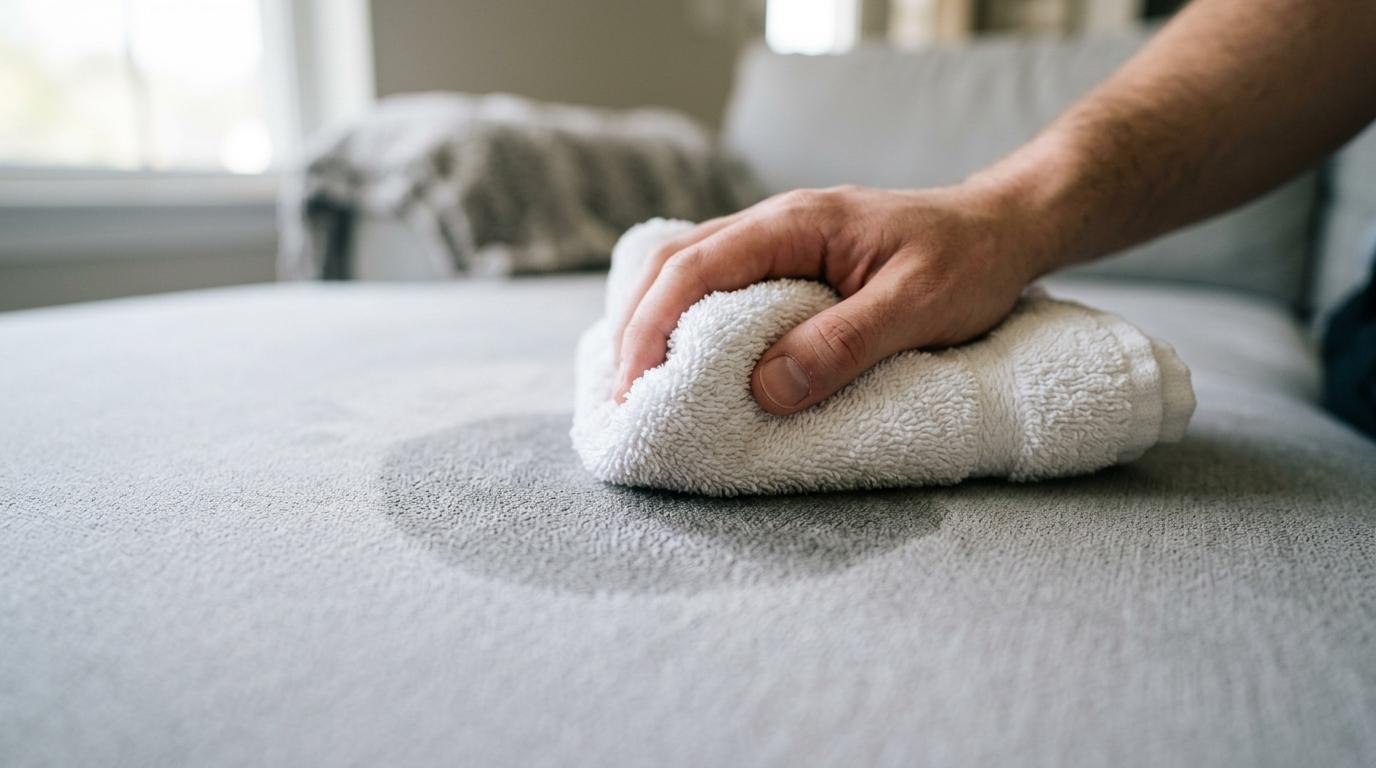
Treat fresh accidents immediately with white towels and an enzyme cleaner like Nature’s Miracle. Hot water and hard scrubbing often make urine or vomit worse because they spread proteins deeper into padding and can distort fabric texture.
Fast action matters more than fancy chemistry. If the stain is fresh, you have a real chance of stopping odor before it sets. Common mistake: rubbing aggressively. That drives the mess outward and downward.
- Blot first: Press with clean white towels until transfer slows.
- Check the care code: W, S, W-S, or X tells you whether water-based or solvent-safe cleaning is appropriate.
- Apply enzyme cleaner: Wet the affected area enough to reach the same depth as the accident, then let it dwell as directed.
- Blot and dry: Remove excess moisture, then let the piece dry fully before pets use it again.
If odor returns after drying, the residue likely remains below the fabric. That is the point where extraction becomes more important than more spray.
Is DIY upholstery cleaning or professional upholstery cleaning better for pet owners?
DIY is better for fresh, small messes; professional cleaning is better for set-in odor and hidden residue. A Bissell Little Green can clean one cushion well, but commercial extraction reaches deeper into foam, batting, and backing.
DIY wins on speed and cost. If your dog tracks mud onto one chair or your cat leaves a small hairball stain, blotting and spot treatment can solve it fast. Consumer tools are also useful for maintenance between professional visits.
Professional service wins on depth, odor control, and fabric safety when the problem is larger. If urine has soaked through the fabric, if odor returns after drying, or if the piece is high-value, stronger extraction is usually the smarter choice. This is where trade-offs are clear: you pay more and schedule a visit, but you reduce the risk of recurring odor, browning, residue, and fabric damage.
A good rule is simple. If the mess is fresh and isolated, DIY first. If the stain is old, widespread, or in the cushion core, call a pro.
Which upholstery fabrics are easiest to clean when you have pets?
Leather and tight-weave microfiber are usually easier for pet owners than velvet or loose linen. Leather seating wipes down quickly, while open-weave cotton traps fur, dander, and claw snags far more easily.
Microfiber is popular for a reason. Its dense weave resists hair penetration better than many textured fabrics, and many spills stay near the surface long enough to blot. The trade-off is that oils from pet coats and human skin can create darkened headrest and arm areas over time.
Leather is easy to wipe and does not hold hair the way woven fabrics do. The trade-off is scratching. Cats can mark leather fast, and low-quality leather can dry out or crack if harsh cleaners strip its finish.
Velvet, chenille, and loose linen look great but ask more of the owner. They show pile distortion, hold hair, and can react badly to over-wetting. A common misconception is that darker fabric is easier to maintain. Dark upholstery hides fur and stains, but it does not stop odor or dander buildup.
What pet-safe upholstery cleaning products actually work?
Pet-safe products that work are usually enzyme-based, low-residue, and free of bleach or ammonia. Nature’s Miracle and Biokleen Bac-Out are common examples; ammonia-based spotters are the ones pet owners should avoid first.
Enzymes matter because pet stains are organic. Urine, vomit, saliva, and feces are made of proteins, bacteria, and waste compounds. Enzymatic cleaners break those materials down instead of just masking the smell. That is why they outperform perfume-heavy sprays on true pet odor.
Baking soda is useful, but only within limits. It can absorb light surface odor when sprinkled on dry upholstery and vacuumed later. It does not replace extraction when urine has reached the cushion. Vinegar has a place for light deodorizing, yet it is not a complete pet-odor treatment either. Misconception: if the couch smells fine while wet, it is fixed. Many odors become more obvious only after the fabric dries.
Patch-test every product on a hidden area first. Keep pets off the upholstery until it is fully dry, especially if the label recommends dwell time or rinse steps.
When should pet owners call a professional upholstery cleaner?
Call a professional when odor returns after drying or when stains cover more than a small spot. If a black light reveals several urine marks, or if a sofa has down cushions or delicate fabric, expert cleaning is the safer move.
The best time to book is earlier than most people think. You do not need to wait for the couch to feel ruined. Professional help makes sense when any of these are true:
- The same odor comes back after every DIY attempt
- The stain is older than 24 hours
- The mess soaked through more than one layer
- The furniture has specialty fabric or high replacement cost
- Someone in the home reacts to dander buildup
This is also where scheduling matters. Pet homes do better with reliable maintenance, not one emergency clean every few years. For NJ homeowners in Essex County or Bergen County, Maids 4 Jersey is a practical option when you want pet-safe upholstery care supported by recurring house cleaning, consistent teams, and responsive booking. Request a quote if the sofa problem is part of a larger whole-home cleaning plan.
How often should pet owners clean upholstery?
Most pet homes need weekly maintenance and professional upholstery cleaning every 6 to 12 months. A HEPA vacuum handles surface dander, while scheduled deep cleaning helps reset odor, oils, and embedded soil before they shorten fabric life.
Your schedule should match pet load, not just appearance. One short-haired indoor cat creates a different cleaning pattern than two shedding dogs that use the sofa daily.
- Every few days: Brush off pet zones, rotate throws, wipe muddy paw contact points.
- Weekly: Vacuum upholstery, under cushions, and nearby floors with a HEPA unit.
- Monthly: Inspect for hidden stains, wash removable covers, and deodorize dry surfaces if needed.
- Every 6 to 12 months: Book professional upholstery cleaning, sooner for multi-pet homes or allergy-sensitive households.
Pro tip: recurring house cleaning supports upholstery care more than people expect. If floors, vents, and pet corners stay dusty, that debris keeps cycling back onto furniture.
Can you stop pet odors and repeat stains from coming back?
Yes, repeat odor usually stops when you remove the source, protect the fabric, and change the pet’s access pattern. Washable throws, fabric protectors, and fast paw-wiping reduce how much soil reaches the upholstery in the first place.
Prevention is less glamorous than stain removal, but it saves more money. Use washable covers on favorite pet spots. Keep a pet bed close to the family seating area so the animal still has a social place to rest. Trim nails, brush often, and place mats under food bowls and litter boxes.
If a pet keeps returning to one cushion, that is a signal. Either odor remains in the padding, or the pet is marking for behavioral or medical reasons. If the smell keeps returning after cleaning, book extraction. If the marking behavior continues, talk with a veterinarian as well.
Fabric protection can help, with limits. Scotchgard-style treatments improve blotting time and reduce absorption on many textiles, but they do not make upholstery accident-proof. They buy you response time, which is often exactly what pet owners need.
Sorry, the comment form is closed at this time.