
01 May Cleaning Tips for Landlords Between Tenants
A clean turnover is not just about appearances. For landlords, it protects the next lease, reduces complaints on move-in day, and gives you a clear chance to catch damage before a new tenant brings in furniture and boxes.
Between tenants, every hour matters. The unit is empty, the clock is running, and small misses can turn into expensive call-backs later. A sticky cabinet, a musty bathroom drain, or grease inside the oven can shape a new tenant’s first impression fast.
Why turnover cleaning matters for landlords
A rental can look fine at a glance and still fail the move-in test. Smells linger. Dust settles in vents and along baseboards. Grease hides on cabinet fronts. Bathrooms may look white under bright lighting but still have soap film, mildew, and hard-water buildup.
That is why landlords do best with a repeatable turnover process instead of a quick wipe-down. A strong clean helps in three ways: it shortens vacancy by making the unit show better, it lowers the risk of early tenant complaints, and it gives you a proper window to inspect for repairs.
This is also the moment to separate normal wear from real damage. Cleaning and inspection work well together because dirt often hides the exact issues you need to document.
Turnover cleaning schedule tips for rental properties
The easiest turnovers are planned before the old tenant hands over the keys. If you can, leave at least one full day between move-out and move-in. That buffer gives you room for cleaning, touch-up repairs, photos, and a final walkthrough without rushing.
A simple timeline keeps the work from becoming chaotic. Start with trash removal and ventilation, then move top to bottom and room to room. Floors should be last. If carpet cleaning, painting, or appliance repair is needed, schedule those in the right order so one task does not undo another.
- Day 1: Final walkthrough, key return, photos, trash removal
- Day 1 afternoon: Dusting, wall spot cleaning, kitchen and bathroom work
- Day 2 morning: Floors, carpets, appliances, final inspection
- Before move-in: Replace batteries, check leaks, confirm odor-free finish
Reliable scheduling matters as much as the cleaning itself.
Room-by-room cleaning tips between tenants
A room-by-room checklist keeps standards consistent, especially if you manage more than one property. It also makes it easier to hand work off to a cleaner, maintenance tech, or assistant without losing track of small details.
Here is a practical turnover checklist landlords can use.
| Area | What to Clean | Often Missed Spots | Why It Matters |
|---|---|---|---|
| Kitchen | Counters, sink, backsplash, cabinet fronts, stovetop, oven, fridge, microwave | Inside oven door, range hood, cabinet interiors, fridge drawers | New tenants notice kitchen cleanliness right away |
| Bathroom | Toilet, tub, shower, tile, grout, vanity, mirror, fixtures | Drain trap, shower track, exhaust fan cover, behind toilet base | Odors and mildew complaints often start here |
| Floors | Vacuum, mop, steam clean or shampoo carpet | Edges, corners, under appliances, closet floors | Dirt trapped in floors makes a unit feel older than it is |
| Walls and trim | Spot clean, remove scuffs, wipe baseboards and doors | Light switches, door frames, closet doors | Fresh walls improve photos and showings |
| Windows | Glass, tracks, sills, blinds | Window locks, lower track buildup | Dust in tracks makes the whole room feel neglected |
| Appliances | Exterior and interior wipe-down, degrease, sanitize | Drip pans, dishwasher filter, washer gasket | Appliance complaints are common and easy to prevent |
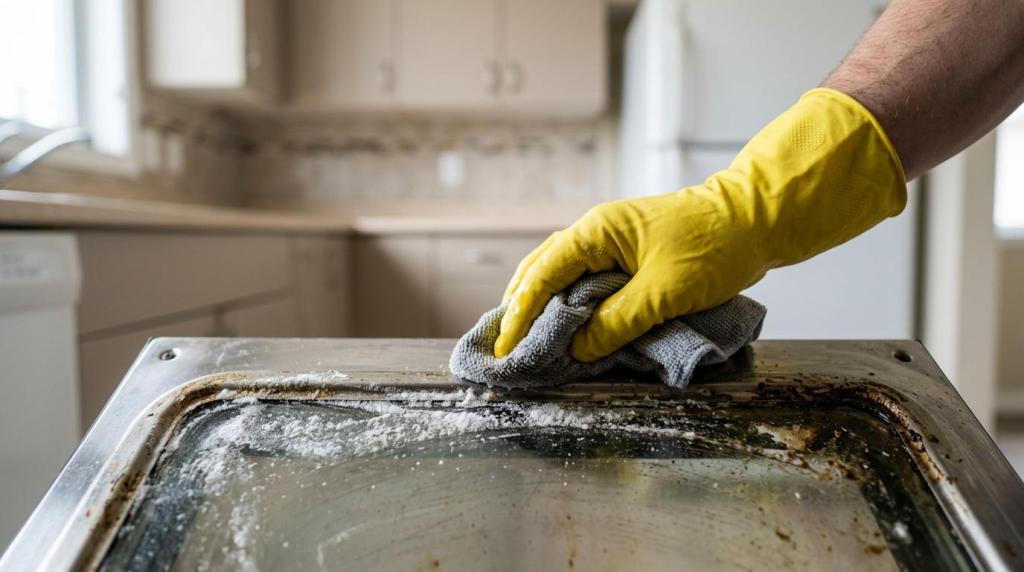
In the kitchen, start with grease. Degrease cabinet fronts, backsplash areas, appliance handles, and around the stove before you try to sanitize. If the oven has baked-on residue, a baking soda and water paste left overnight can help loosen it. The refrigerator should be emptied, shelves removed if needed, and wiped with a mild cleaner or baking soda solution. Do not forget the rubber seals and drip areas.
Bathrooms need both cleaning and disinfecting. Scrub toilets, tub walls, sinks, and tile carefully. Hard-water marks on fixtures and shower glass can make an otherwise clean bathroom look unfinished. If mildew is present, ventilate the space well and use an appropriate cleaner safely. Never mix bleach and vinegar. If mold goes beyond surface spotting, that is no longer routine cleaning and should be addressed as a repair issue.
Floors deserve more than a vacuum pass. Carpets often hold odors, dust, and deep grime, so steam cleaning or shampooing is worth it between tenants, especially after pet occupancy or a long tenancy. On tile, laminate, or sealed wood, use a cleaner suited to the surface and dry promptly. Baseboards and floor edges usually need a separate wipe.
Then come the details people notice on move-in day: switch plates, closet shelves, ceiling fan blades, window sills, and the inside of cabinets. These are the places that make a turnover feel complete rather than rushed.
Safe and effective products for landlord turnover cleaning
You do not need the harshest product on the shelf for every task. A smart mix of all-purpose cleaners, degreasers, disinfectants, and gentle floor-safe products usually works better than using one heavy chemical everywhere.
Vinegar, baking soda, hydrogen peroxide, and castile soap can handle a lot of basic turnover work when used properly. Eco-conscious products from recognized green brands can also be a good fit, especially if you want to reduce strong odors before a new tenant moves in. That said, kitchens with thick grease, bathrooms with mineral buildup, and neglected appliances may need stronger landlord-grade products.
Use separate microfiber cloths for bathrooms and kitchens, ventilate while cleaning, and read labels before combining products. Speed matters, but safety matters more.
Cleaning also reveals maintenance problems
One of the biggest mistakes landlords make is treating cleaning and maintenance as separate jobs. During turnover, they should work together. Once counters are clear and floors are exposed, problems show up quickly: slow leaks under sinks, cracked caulk, loose handles, damaged blinds, water staining, chipped tile, torn screens, and failing smoke detector batteries.
Take photos before and after. Keep notes with dates. If a problem may affect habitability, repair it before move-in, not after the tenant settles in. A clean unit with a hidden leak is not actually ready.
After you have a baseline process, look for these red flags during every turnover:
- Water stains
- Musty odors
- Loose fixtures
- Damaged flooring
- Slow drains
- Broken outlet covers
- Missing detector batteries
- Worn caulk around tubs and sinks
DIY turnover cleaning vs professional cleaning services
Some landlords prefer to handle cleaning themselves to save money and keep close control over the result. That can work well for a small portfolio, shorter units, or properties that were already maintained well during the lease.
Still, there is a point where DIY stops being efficient. If you are juggling multiple units, working on a tight vacancy window, or dealing with kitchens and bathrooms that need real reset work, professional cleaners often save time and reduce stress. That is especially true when the goal is consistency, not just speed.
A professional team is also useful when the property needs a higher standard for photos, showings, or a mid-to-premium rental audience. Busy owners and property managers often value reliable scheduling just as much as the cleaning itself. If the team shows up on time, follows a structured checklist, and communicates clearly, your turnover becomes much easier to manage.
Move-out and deep cleaning services for North Jersey landlords
For landlords who want less scrambling between tenants, it helps to know which service fits the situation. Maids 4 Jersey focuses on reliable scheduling, detailed cleaning systems, and consistent teams, which matters when you need a unit ready on a real deadline.
Here is how the main services fit common turnover needs.
| Service | Who it’s for | When they need it | What makes it different |
|---|---|---|---|
| Recurring house cleaning | Owners of occupied homes or rental houses being kept market-ready | During long-term upkeep or before listing photos | Consistent teams and predictable scheduling |
| Deep cleaning | Landlords facing buildup after a long tenancy | Before a new lease, after deferred cleaning, or before painting | More attention to baseboards, buildup, and rarely cleaned areas |
| Move-in/move-out cleaning | Landlords between tenants | Right after keys are returned and before the next move-in | Includes detail work inside cabinets, ovens, and refrigerators |
| Apartment cleaning | Owners of condos and smaller units | Tight turnovers where efficiency matters | Good fit for compact layouts and quick reset needs |
| Small office cleaning | Owners or managers of mixed-use and office spaces | Tenant changes, refreshes, or ongoing upkeep | Structured cleaning for professional spaces |
That range matters across North Jersey, where one landlord may need a quick apartment turnover in Belleville while another is preparing a larger home in Livingston. A busy owner in Verona may need deep cleaning after years of occupancy, while a property in Glen Ridge may need a more polished move-in clean before a premium listing goes live.
FAQs about cleaning between tenants
How clean should a rental be before a new tenant moves in?
Clean enough that the tenant can unpack without doing your work first. That means sanitized bathrooms and kitchen surfaces, clean appliance interiors, odor-free rooms, dust-free baseboards and vents, and floors that have been properly cleaned, not just swept.
Should landlords steam clean carpets between tenants?
If the carpet shows visible soil, odor, pet residue, or heavy traffic wear, yes. Vacuuming removes surface dirt, but it does not pull out embedded grime the way a carpet machine can.
What is the most commonly missed area during turnover cleaning?
Appliance interiors and edges are high on the list, followed by cabinet interiors, window tracks, exhaust fan covers, and baseboards behind doors.
When is professional deep cleaning worth it?
It is worth it when time is tight, the unit has clear buildup, or the rental is aimed at tenants who expect a polished move-in experience. It is also a smart choice when the owner wants reliable scheduling and fewer callbacks.
Local cleaning support for landlords in Essex and Bergen County, NJ
Landlords in North Jersey often need more than one kind of help. One turnover may call for a full move-out clean, while another needs regular upkeep before listing or after repairs. That is where local service pages can help if you are comparing options by town.
If you are looking for local help, you can check pages for house cleaning in Nutley, NJ, cleaning services in Bloomfield, NJ, deep cleaning in West Orange, NJ, and house cleaning in Livingston, NJ. Nearby owners also search for help with house cleaning in Belleville, NJ, cleaning services in Verona, NJ, deep cleaning in Cedar Grove, NJ, and house cleaning in Glen Ridge, NJ. In Bergen County, common searches include cleaning services in Hackensack, NJ, house cleaning in Garfield, NJ, deep cleaning in Lodi, NJ, and cleaning services in Saddle Brook, NJ.
Those local pages matter because a landlord managing one property in Nutley and another in Bloomfield may need slightly different scheduling, property access, and service timing. The same goes for owners juggling suburban homes, condos, and small office spaces across Essex and Bergen County.
If you need a turnover handled without chasing contractors or re-cleaning missed areas, request a quote, book now, or schedule today. A well-cleaned rental saves time, lowers stress, and gives the next tenant a much better start from day one.
Sorry, the comment form is closed at this time.